Sunday, December 29, 2013

Rest for the Weary

How was your Christmas?
Restful?
Refreshing? Haha yea right!

From the shopping melee that started on Thanksgiving this year, to the cooking and entertaining, to the attending of parties; Christmas has become a very hectic time of year.  Once you reach a certain age, I am pretty sure that everyone prefers Thanksgiving (otherwise known as Black Friday Eve) over Christmas, because with Thanksgiving you just eat and hang out with family.  Not nearly all the drama and craziness, not to mention expense, that goes along with Christmas.

Busyness and anxiety seem to rule our society and not just around Christmas time.  I read recently that the average high school student today has the same anxiety level as the average mental patient did in the 1950s.  That's crazy to think about! pun intended.

But seriously we are a culture on the go!  Between work, children's activities, church and other commitments people are run ragged.  Think about the last time you actually sat quietly for an hour.  When was it?

I bet it was either in class, church or when you were sleeping.  And even then we try to multitask (i.e. sleeping in church).

Even vacations, which are suppose to be restful, can be busy and stressful.  I just got back from spending 11 days in California.  And even in the 80 degree winter weather out there, there was no time for rest, relaxation or reflection.

In fact, the most restful time of the whole 10 days was surfing.  An activity that includes having cold waves pound my head, huffing and puffing because I am so out of shape, and trying not to get caught on the inside or in the rip current.  Though you may have never surfed in your life, I am willing to bet you would rather try to brave the Pacific Ocean on a surfboard than Walmart on Christmas Eve.  Which I also did, and that is a story for another time, but lets just say that it looked like Baghdad after Shock and Awe.

But rest is so important... even the world knows it...  After combing through tons of articles online about rest and dealing with anxiety, I found some common themes that emerged.  The first being the obvious: a good way to deal with anxiety is to rest.  duh!

But how does one rest? The world seems to think in order to rest we either need to remove "unnecessary" things from our hectic schedules or add things to them.

The idea of adding things to my schedule increases my anxiety immediately, especially if that thing is Yoga (an all to often addition suggested by many articles).  The idea of putting on Yoga pants is anything but restful.

And though removing "unnecessary" things seems like a great idea, in reality, things are on our schedule because we have deemed them necessary.  Thus, it would be very difficult, if not impossible, to remove anything from our schedules.

Though we may see resting as a pipe dream we are only able to achieve every once in a while, it is a command of Scripture and vital to our overall spiritual health, not to mention our physical health.

In the book of Matthew, Chapter 11, After rebuking the Pharisees, Jesus prays, thanking the Father for revealing himself to the "little children", and then further reveals the heart of the Father, starting in verse 28.

He says, "Come to me, all you who labor and are heavily burdened, and I will give you rest. Take my yoke upon you, and learn from me, for I am gentle and humble in heart; and you will find rest for your souls. For my yoke is easy, and my burden is light."

To rest, throughout Scripture is a command and a promise.  It is a promise because the Lord promises rest to those He loves, but it is also a command that the Lord takes seriously.  Going all the way back to Genesis chapter 2, on the Seventh Day, the LORD rested and so he blessed that day and set it apart as holy.  Israel refused to heed God's command to rest and went into exile in Babylon for 70 years.

How do we, in this culture of do more, try harder, go, go, go; find rest?

This is what I love about Scripture.  It isn't some rule book that we try to interpret and live by.  No, we let the Bible interpret us, read us, and help us do what it says.  For in these little verses we find how we can rest, when the whole world is laying burden's on us that neither they, nor their fore-father's could bear.

Christ, in this passage tells us how to find rest.  First he says, "Come to me, all who are weary and heavy laden"

This cry of our Lord is repeated constantly in Scripture.  The Spirit says through the prophet Isaiah "Come, everyone who thirsts, to the waters!  Come, he who has no money, buy, and eat!  Yes, come, buy wine and milk without money and without price." (Isaiah 55:1)

God wants those who can't help themselves to come to him...

My brothers and sisters, are you weary and heavy laden?

Come to Christ.  Come to him with open hands and an open heart.  Many people come to Christ for salvation and then venture off as if they can do everything else themselves.  No!  Come to Christ and stay there and let his joy and love warm your soul.

The Psalmist in Psalm 127 insists that without the Lord, everything we do is in vain.  He says
"Unless the LORD builds the house,
    they labor in vain who build it.
Unless the LORD watches over the city,
    the watchman guards it in vain.
It is vain for you to rise up early,
    to stay up late,
    eating the bread of toil;"

 He further says that a mark of one who comes to the Lord is rest, because "[the LORD] gives sleep to his loved ones"

But how do we come to Christ?

We do it by faith.

And what is faith?

John Calvin says faith is "A firm and certain knowledge of God's benevolence towards us,
found upon the truth of the freely given promise in Christ, both revealed to our minds
and sealed upon our hearts through the Holy Spirit."

you got that?
me either.

Let me put it another way:  Faith is trusting God.  Do you trust God with your anxieties and fears.  With your busy schedule?  Do you?

Do you expect as the Scriptures say, "the goodness of God' (Psalm 27:13)?

The Psalmist in Psalm 55:22 says, "Cast your cares on the LORD and he will sustain you; he will never let the righteous be shaken."
Do you believe that the Lord can sustain you?

Peter summarizes the words of that Psalm when he says, "Cast your cares on him, because he cares for you" (1 Peter 5:7)

Do you believe it?  Are you willing to trust God with those things that make you toss and turn at night?

Having faith and trusting God can be tough a times.  How do we increase our faith and trust?  It's through experiencing the faithfulness of God.  Let me give you an illustration:

A guy from California was going to La Pointe, WI on vacation in the dead of winter.  He had taken the bus from the airport to Bayfield, but was told he couldn't get to La Pointe till the morning.  So he wanders into a little place there in Bayfield and gets a drink.  While chatting with a local, he finds out that his hotel in La Pointe is just under two miles away.  In fact, he can see it from the bar!

So after a couple drinks, the guy ventures off towards the light that the local pointed out.  After about a mile,
he realizes that he is walking on a frozen portion of Lake Superior and becomes worried that he might break through the ice.  Every steps he hears crack, crack...  He remembers watching a nature show that said to spread your weight out over the ice, so he lays on his stomach spread out over the ice and begins to inch along.  As he nears the end of his journey he hears a loud horn and turns around to see a semi truck driving over the same ice he has been crawling on!

You see the man and the truck were both supported by the ice.  The smallness of the man's faith had no bearing on the support that the ice was giving.  But the experience taught the man that he could trust the ice and not be fearful.

So we come to Christ in faith, and trust that he is faithful and will do what he has promised.

The second way we can learn to rest in Christ is found in verse 29 of Chapter 11.  It says, "Take my yoke upon you, and learn from me... For my yoke is easy and my burden is light"

The Lord, the Sovereign of the Universe tells us that the way we rest is by participating with Him in His work.  We do this by obeying him and following his lead.  1 John 5 says "Whoever believes that Jesus is the Christ has been born of God. Whoever loves the Father also loves the child who is born of him. By this we know that we love the children of God, when we love God and keep his commandments. For this is the love of God, that we keep his commandments. His commandments are not burdensome."

You see, we participate in the Love of God by obeying him and his commands aren't burdens.  They are freeing.  The Psalmist in Psalm 119 says that he walks about in freedom because he obeys the precepts of the Lord.  I recently read a book called the Tyranny of Choice.  It puts forth the idea (from a secular view point), that all the options that we now have through technology are oppressive, rather than freeing.  This is what the Bible means when it says "You are a slave to the one you obey" (Romans 6:16).  When we obey ourselves, we end up in sin and oppressed by our own desires.  When we obey God, we are freed.

When we turn from trusting God and resting in Him, we even hear the scriptures differently.  In Isaiah chapter 28, God had been speaking to his people through the prophet, yet the refuse to hear.  They were prideful and relied on themselves.    God's Word said, "This is the resting place. [I][g]ive rest to weary, here is refreshment"(v. 12), but they wouldn't listen.  So instead of hearing God's Words as rest and refreshing, they heard, "Do this and do that. Do that and do this.Obey this rule and obey that rule.  Obey that rule and obey this rule.  Learn a little here and learn a little there." (v. 13)

God meant His Word to be refreshing and not burdensome, but when we don't listen to God and rest in Him, we begin to hear His Word as rules and gibberish.  When we trust God, it is a resting place for our souls.

And what is it that God commands?

"believe in the name of his Son, Jesus Christ, and love one another..." (1 John 3:23).  When we operate out of Love, we are participating with God in His work in this world.

Stop striving to live up to others standard, stop trying to out do your neighbor.  As the psalmist says, "Stop striving and Know that the Lord is God.  He is exalted" so we don't have to be.  Trust that the Lord will provide, the Lord will satisfy.  Come to Christ, lay your burdens down, throw off that yoke of slavery that the world gives to you and put the yoke on that Christ gives us.  You are not working alone, you are working along side Jesus Christ in this world.  His yoke is easy and his commands are not burdensome.

Saturday, August 24, 2013

Puritan Prayer of Continual Repentance

O God of grace,
Thou hast imputed my sin to my substitute, and hast imputed his righteousness to my soul, 
clothing me with a bridegroom’s robe, decking me with jewels of holiness.

But in my Christian walk I am still in rags; 
my best prayers are stained with sin; 
my penitential tears are so much impurity; 
my confessions of wrong are so many aggravations of sin; 
my receiving the Spirit is tinctured with selfishness. 

I need to repent of my repentance; 
I need my tears to be washed; 
I have no robe to bring to cover my sins, no loom to weave my own righteousness; 

I am always standing clothed in filthy garments, and by grace am always receiving change of raiment, for thou dost always justify the ungodly; 

I am always going into the far country, and always returning home as a prodigal, always saying, 
"Father, forgive me," 

and thou art always bringing forth the best robe. 

Every morning let me wear it, every evening return in it, go out to the day’s work in it, be married in it, be wound in death in it, stand before the great white throne in it, enter heaven in it, shining as the sun. 

Grant me never to lose sight of: 
the exceeding sinfulness of sin, 
the exceeding righteousness of salvation, 
the exceeding glory of Christ, 
the exceeding beauty of holiness, 
the exceeding wonder of grace.

Thursday, August 15, 2013

A New Heaven and A New Earth (audio)

Here is my sermon on The New Heaven and New Earth From Revelation 21:1-7.  This sermon goes a long with my three part blog post "God's Eternal Purpose and Our Eternal Hope"
Click here to download or press play to stream


Tuesday, August 13, 2013

The Need for Care in Healthcare

Today I worked as an actor.  My stage was a hospital bed, my audience: nurses, x-ray techs and repository therapists in training.  I played a thirty year old construction worker (hey don't laugh, I once helped frame a house), who had fallen off a roof and is now paralyzed from the waist down.  I had been in the hospital for 4 weeks, had a catheter, feeding tube, breathing tube, and was becoming anxious.

I was given two tasks: have a respiratory issue, which would require breathing tube adjustment, some
therapy and a chest x-ray; the second issue was less physical, and more "spiritual".  The person in charge of the simulation asked me to ask about my condition, and how my life was going to change.  Some of the questions were about if my condition was permanent, another one was about how long I had to be in the hospital, if I could use the bathroom on my own, if I could have sex, and other questions like that to make the nursing staff uncomfortable.

How they were trained to answer left me saddened.  Not that they did anything wrong.  Nurses, x-ray techs, and repository therapists are trained to deal with our physical aliments, and the questions, they would defer to other people.  When I asked about my condition, they would check to make sure my brain was operating correctly.  They would ask if the doctor had already explained these things to me.

Often the nurses would reassure me that a social worker, psychiatrist, or chaplain would help me with my issues, as they walked out and closed the door behind them.  I am sure that these professionals can and do help tremendously in these situations, but as I laid there, I thought, if this was real what would I really need?

I needed someone to cry with me, to be with me, to love me as I am and not as I should be.  In short, someone who could demonstrate the love of Christ and step into my situation.  Someone to be weak with me, there were enough people around me "being strong".  Some one who could care about me, not for me.

As the simulation ended, before getting up, I prayed for those who will not get up from that bed.  I was reminded that "Christ sometimes cures, but He always heals".  And as Christians we are called to "weep with those who weep" and to demonstrate what it truly means to be human: To be like a Christ and step into other's pain and suffering, for no other reason that just to be with them and love them.

Saturday, August 10, 2013

God's Eternal Purpose and Our Eternal Hope (Part 3 of 3)

In the past two blogs, I have spoken about how God's eternal purpose of bring glory to himself, gives us eternal hope.  We looked at this eternal hope by looking at Revelation 21:1-7.  So far, going through this
passage, we have seen two parts of God's three-fold purpose:

1) to create a companion for His Son (We are that companion that God is making suitable for His Son)
2) to create a place for Him to dwell and rest (That place is our eternal abode with Him)

Now we we see his third purpose, to share His trinitarian life with you and I.  You could call this purpose, God's desire to have a people (or family).

He will wipe away from them every tear from their eyes.
God, is comforting his people in this passage. We have many tears because of the effects of sin and how our sins have damaged our relationships: with one another and with God. God will make these relationships right, but in doing so, there will be many tears shed... They must be shed. So here God comforts us, as a mother comforts her weeping child.
Death will be no more; neither will there be mourning, nor crying, nor pain, any more. The first things have passed away.”
A complete restoration and reversal of the curse from Gen 3. No more will our relationships with one another be cut off due to death, no more pain in our hearts from the loss of a relationship, either through death or through our own stubbornness. This old order of things has passed away. Our relationships with one another will grow for all eternity as we share the in the relationship of Father, Son and Holy Spirit.

He who sits on the throne said, “Behold, I am making all things new.”
This is a work he has already started in you and me. Paul writes, “if anyone be in Christ he is a new creation, the old things have passed away and behold all things are becoming new”. This is the concept that theologians call “here, but not yet”. "He who has begun a good work in you, will take it to completion." Here is the completeness of the work of God. We are new, our relationships are new, and one day this whole universe will be made new.
He said, “Write, for these words of God are faithful and true.”
God’s words are faithful and true, stay near them, listen to them, heed them, wrap them around your heart and mind, encourage one another with these words.
He said to me, “It is done! I am the Alpha and the Omega, the Beginning and the End. I will give freely to him who is thirsty from the spring of the water of life. He who overcomes, I will give him these things. I will be his God, and he will be my son. He who overcomes is the one who believes in Jesus Christ. For How can we enter this everlasting life given to us by the trinity, if we don’t even believe that such a life exists? It is only in Christ that we see such a life. 

The Scriptures tell us that a Father’s crown of glory is his children. Our heavenly Father’s glory is you and me. This relationship, which we get a preview of when we see the relationship between a parent and a child, will come to it’s fullness when God expels sin, presents us as a companion for His son, dwells with us, and we inherit what he has promised for his children. That is it... Forever we will live with God, sharing in his divine love, drinking from the water of life. The symbolic metaphor for the trinitarian life. That everlasting life available through Christ. The catch is... you must be thirsty. Are you thirsty for life as it should be, relationships as they should be? Come and drink. It starts now... “here, but not in it’s fullness”... Eternity begins today, relationships are restored today, marriages become fulfilling today... but they will be brought to their fullness on that day... when the dead are raised and heaven and earth merge.


Friday, August 9, 2013

God's Eternal Purpose and Our Eternal Hope (Part 2 of 3)

In the last post, I talked about God re-creating everything, just as we are a New Creation in Christ, so Heaven and Earth will become new a the completion of all things.  Why does God make everything new?  Let's continue reading Revelation 21:1-7:

I saw the holy city, New Jerusalem, coming down out of heaven from God, 
I elaborated on this in my last post, but in summation, this New Jerusalem is the dwelling place of the saints, who are according to First Peter, the building blocks of the city.  And John sees Her coming down prepared like a bride adorned for her husband.


Throughout Scripture, this metaphor, of a husband and wife, is used as the relationship of God and his people. In Hosea God’s people are seen to be an adulterous wife... Paul tells the Corinthians that he is going to present them to Christ as a spotless bride. This bride is the culmination of the work of God. The virtuous wife of David’s Son spoke of in Proverbs 31. A helper suitable for God the Son. As in Genesis, when God made a companion suitable for his son Adam from Adam’s side. So the Father makes a helper suitable for the Second Adam, from Christ's side.

After Christ had died on the cross, his side was pierced, and out flowed the water to baptize and cleanse his bride and the blood by which he bought her. And it is from his side that God fashioned his Bride... the Church... You and me. Cleansed by the water, bought by the blood and confirmed by the Spirit. As John says there are three that testify: the Spirit, the water and the blood and these are in agreement. Do we accept this testimony? And this is the testimony God has given us eternal life and this life is in his Son. He who has the Son has life, he who does not have the Son of God does not have life. How wonderful it is to be included in God’s eternal purpose as the companion of His Son.

You see God’s eternal purpose is to bring glory to himself. His purpose is triune as He himself is triune in nature. God is a relationship between Father, Son and Spirit that has existed for all of eternity. And He seeks to share that relationship with that which he has made and purchased. That brings him ultimate glory! Here John sees this in his fullness and uses three examples to demonstrate this. We have seen the first one: Husband and Bride... A companion for His Son, one with which he will be equally yoked. We see how that relationship is “here, but not yet...” in the relationship between husband and wife. Husbands are to love their their wives as Christ loved the church and gave himself for her. Right now that relationship is damaged by sin, but here John of Patmos sees it in all it’s glory! How glorious it is.  

I heard a loud voice out of heaven saying, “Behold, God’s dwelling is with people, and he will dwell with them, and they will be his people, and God himself will be with them as their God.
As human’s isn’t there something special about where we dwell? We say that we want a liveable space, but what we really mean is something more relational than that. A place where we can live with the ones we love,
and converse, and eat meals together. A place of relationship is where we dwell. This is also what God desires as well. This dwelling is the restoration of what was lost in the Garden. The very dwelling of God with man, where Man and God could walk with one an other in the cool of the day.

The Holy Spirit, the Third person of the trinity Lived in the tabernacle in the wilderness, and lived among the people. And the Holy Spirit Tabernacles with in you and I, and with among us as the Church. For the Holy Spirit is the working of God among men.

Yet with this dwelling the Lord says by the mouth of the prophet Isaiah, “Heaven is my throne and the earth is my footstool, where is the house you will build for me? And where shall my resting place be?”

It is no coincident that John uses the same word here for dwell, which is literally tabernacle, as he does in his Gospel where he says that the Word dwelt among us. Yet even in flesh, the Word, very God from very God, Light from Light, could not find a place to rest. For He says, “Birds have nests and foxes have holes, but the Son of man has not a place to lay his head”.

The second person of the trinity tabernacled with us and identified with our weakness. But here the fullness of the Godhead is dwelling among men, and instead of identifying with our weakness, we are identifying with God’s glory and righteousness. In the dwelling of God, we shall rest, as we do now, but he shall also rest and commune with us. We will walk with him in the cool of the day, as Adam did with him in the Garden.

This Heavenly city... the place of God's people, of restored relationships is certainly the place the Psalmist speaks of when he says "For the Lord has chosen Zion, he has desired it for his dwelling... this is my resting place for ever and ever, here I will sit enthroned, for I have desired it"

Thursday, August 8, 2013

God's Eternal Purpose and Our Eternal Hope (Part 1 of 3)

As Christians we have an eternal hope, the hope of heaven and being with our Lord forever. But, what does this look like? What is summation of all things? Is it like being in a giant choir forever and ever? Do we become angels and sit on clouds and strum harps all day long?  That sounds less like heaven and more like...
well, anyway.

Is it relative? That is to say, does each person get their own personal heaven? this is an extremely popular view. Many religions of the world have this type of theory... Heaven or the afterlife becomes very personnel, just like a personal blissful, peaceful experience... something that is almost achievable if you got your hands on the right kinds of plants, if you know what I mean.

This "own personal afterlife" is so popular that even some humanists/atheists have theorized this type of after-life. The humanist and philosopher David Staume says that the odds of an afterlife are fairly reasonable, the odds of meeting God there is nil. His idea of a secular after life has been furthered by Bryon Ehlmann, a computer scientist and philosopher who calls the theory the "Neverending Dream".

To put it simply, both these men argue that when religions of the world speak of heaven, what they are referring to is a dream from which we do not wake up. Their argument is that if you never wake up, you will never know that you are dreaming.

Is this the hope we have as Christians? To peacefully and blissfully dream for eternity? Could this be the purpose for which we were made? God's grand finale?

Hardly.

Christians believe in resurrection and re-creation. We believe that God's purpose is bigger than just making things blissful for us. We believe heaven is here, but not yet... it is awaiting it completeness, when the kingdom of the world becomes the Kingdom of our Lord and of His Christ. When our relationship with him and with one another becomes healed, by the only one who can possibly heal, the one who is both God and man, Jesus Christ.

You see, heaven is not personal, it’s relational. We will be in the presence of God and one another, absent from the corruption of sin, forever. We won't be stagnet, because our relationship with God and one another will continue to grow and deepen over time.

This is when God's eternal purpose comes to fruition within our reality!

Revelation 21-22 is the final restoration of what was lost in Gen 3, when man fell into sin. It speaks to God's eternal purpose, to share the trinitarian life with those who are created in His image, bringing ultimate glory to himself. John describes his vision of the culmination of everything. His description is heavily rooted in the words of the prophets of the Hebrew Scriptures.

Let's look at the first seven verses of Revelation 21, as a starting place to begin to see God's eternal purpose and what our hope for eternity looks like.

First he says I saw a new heaven and a new earth:
John sees a complete fulfillment of the promises made in Isaiah 65:17-25; 66:22. This was the hope of Israel
and of the apostles: The New Creation. But, this New Creation is not only future. Sure will into it's fullness and be completed at the end of time, but Paul says in 2 Cor 5:17 “If any man be in Christ, he is a New Creation,” and just like John who says for the first heaven and the first earth have passed away, so Paul continues “the old is gone and the new has come”. We begin to experience the new creation here, in this life, here in our relationship with our family, our relationship with God. Remember the old has passed away, you are not enslaved as you once were, anxiety and anger, insecurity of what the future holds does not have to keep you up at night. He who has begun a good work in you will bring it to completion. In this vision John sees the work of God in us, be brought to completion. It is Gen 1 all over again.

and the sea is no more.
As a surfer this part has always kind of grieved me. But, John is saying so much more then “put away your surfer boards”. The sea in scriptures is often spoken of as a place of confusion and judgment. The promise here is that “God is not a God of confusion”, he is making things right. I’ll have to stick to surfing on the sea of glass.

I saw the holy city, New Jerusalem, coming down out of heaven from God,
Remember when Jesus told Nicodemus in John 3, “You must be born again”, in Greek “born again” is gennao anothen which means “born from above”. This New Jerusalem is from where one must be born (or be a citizen). And in Hebrews when the writer says that the OT saints were looking for a heavenly country, one built by God... This is that heavenly land. the Psalmist tells us in Psalm 87, “The Lord loves the gates of Zion more than all the dwellings of Jacob. Glorious things are said of you, O city of God:” Selah. Isn’t Jerusalem a dwelling of Jacob? Then why does God love the Gates of Zion more than all the dwellings of Jacob. The Zion the Lord is speaking of is one that He himself builds, where He Himself dwells with His people. It truly is the city of God. “I will record Rahab and Babylon among those who acknowledge me- Philistia too, and Tyre, along with Cush _ and will say “This one was born in Zion”... The Lord will write in the register of the peoples: “This one was born in Zion”
All these places mentioned are enemies of the city of Jerusalem according to the flesh, but the Lord will record those who are born of the Heavenly Zion in His register... the Book of Life. Is your name written in the book of Life?

The next part, we will see what is God's purpose in making everything new.  

Wednesday, August 7, 2013

Eternal Destiny of the Unevangelized

As people hear and are exposed to the Gospel and as the Spirit opens their minds so that they see the heart of God as revealed in Jesus Christ; naturally the question arises: What about those who have never heard the good news of Jesus Christ? They live this life without Him, must they spend eternity apart from Him because no one took the time to properly explain the gospel to them?

This question arises out of two truths taught by all Evangelical Christians: Namely God's universal love and that God has a particular plan for accomplishing this salvation. Repeatedly through Scripture we see that God loves all, but is determined to accomplish what He set out to do. This dynamic has lead to a debate within Evangelicalism over the eternal destiny of the unevangelized. Theological discussions of this sort are healthy, because as evangelicals, we must stop clinging to theology, and start clinging to the Gospel. The life, death and resurrection of Jesus Christ is the Gospel. As Martin Luther proclaimed, Crux sola est nostra theologia Therefore the answer to this question is not found in human reasoning, or in theological theories, but in what God reveals about Himself, specifically in the redemption that came by Jesus Christ.

First and foremost, Jesus Christ is the only Way to eternal life. Long before Christ was incarnated, God had made it known that He alone was the only Savior (Isaiah 43:11). In John 14:6, Christ declares Himself to be the only way of access to the Father. There is no access to God with out mediation, and there is only "One Mediator between God and men and that is the man Jesus Christ."(1 Timothy 2:5).  He [Christ] introduces and presents the person and services of his people to his Father, and gives them acceptance with Him.

Therefore all ideas of pluralism must be abandoned. Pluralism is the view that holds that Jesus is only one of many saviors throughout the different religions of the world. This idea has been rejected by mainstream Christianity, because it regards Christ as not unique. God always refers to a sin moment in time when takes away sin (Zechariah 3:9) and only God's Arm brings salvation (Isaiah 51:5); and Jesus Christ is that Arm (John 12:38). Only the Word incarnate could be Savior of the world.

Since Scripture testifies that there is only one Savior, Jesus Christ the Only Begotten of the Father (John 1:18); it must be assumed (and all evangelical Christians would agree) that He is ontologically necessary for the salvation of the world(1 Corinthians 15:17; Romans 5:10; Titus 2:11-14; 1 John 2:2). That is all are saved through Christ, but do all have to know about Christ? At first glance it may seem obvious that to have faith in Christ, you must know about Jesus, but one must take into account the Old Testament saints. They were saved through Christ, but did they know all the facts about their redemption? It is at this point that evangelical Christians can be split in to two different camps, exclusivism and inclusivism.

Exclusivists hold that Jesus is the only Savior for all humanity, and that it is not possible for anyone to be saved apart from explicit knowledge of Christ and the Gospel. But therein lies a problem, how can God "desire all men to be saved" (1 Timothy 2:4) if some people never get the opportunity to hear the Gospel and thus can not be saved. To fix this logical problem in exclusivism, there are three views that have been espoused from Scripture.

The first view is called the "Restrictivist View". Restrictivist theologians teach that all men are judged by what they know, thus the unevangelized are judged by what they should have known from creation (Romans 1:18-22). R.C. Sproul says that "if a person in a remote area has never heard of Christ, he will not be punished for that. What he will be punished for is the rejection of the Father of whom he has heard [through creation] and for the disobedience the law written on his heart"

It appears if this view is to be consistent, that there is no salvation for a child (born to unsaved parents) who dies in infancy, no salvation for people who died before missionaries could reach them, no salvation for those oppressed by a cruel tyrant, and no salvation for the mentally handicapped. In response to an objection of unfairness and cruelty, many restrictivists echo Paul's statement "But who are you, O man, to talk back to God? "Shall what is formed say to him who formed it, 'Why did you make me like this?'"(Romans 9:20). God knows what's best for us, He knows the great work he is accomplishing, so He is not unfair, He is good (Matthew 20:13-15).

Some exclusivists believe that one way or another, all who have a heart to believe will be given an opportunity. This group properly observes that in Scripture, God holds out His hands to a rebellious people (Romans 10:21), that He wants all men to be saved (1 Tim 2:4), and that He is the "rewarder of those who diligently seek him" (Hebrew 11:6). Also throughout Scripture people are brought to the knowledge of the Truth by supernatural experience. Some New Testament examples are Paul the Apostle (Acts 9), the Ethiopian eunuch who was seeking truth (Acts 8), and Cornelius who also was trying to be faithful to God (Acts 10). This view is largely an Arminian stand point, because from the stand point of Calvinism, this is just God working out His elective purposes. Since in Calvinism God will not fail to save those who he has chosen, one could be a restrictivist and still hold to this as a way that God seeks out His elect.

Another view point that exclusivists esponged from Scripture is the idea of postmortem evangelism. Again, this idea springs from the fact that the theme of Scripture is that the Creator loves and cherishes His creation and does not want any to perish (2 Peter 3:9). Not only that, but Christ has defeated death that held the human race hostage since the fall.(Hebrews 2:14; 1 Peter 3:18-20). Death is not the dividing line for the love of God. For there is no death that except that which ends in resurrection (Daniel 12:2). Furthermore, even Christ tells Thomas, "Because you have seen me, you have believed; blessed are those who have not seen and yet believed". Is Thomas any less an apostle because he had to see in order to believe? Certainly not, Jesus just refers to those who believe without seeing as "blessed".

Some may argue that Hebrews 9:27 rules out any possibility of postmortem conversion, but, when taken in it's context, Hebrews 9:27 declares no such thing. In fact Paul in comparing "Just as man is destined to die once, and after that to face judgment" with "Christ was sacrificed [died] once to take away the sins of many people [judge sin]"; he leaves no doubt what he is speaking about. "As man dies but once, Christ was offered but once, or he suffered and died but once...".  Paul is speaking to the completeness and effectiveness of Christ's sacrifice.

Postmortem salvation stops just short of being "inclusive", because it demands that someone not only must be saved through Christ, but they must know that they are being saved through Christ. Though inclusive and exclusive views believe much the same things about God and Christ being the only way to salvation, they part ways in the exclusivities assumption that a person must explicitly know about and believe in Jesus. All people are saved through Christ, whether or not they know it.

The Bible declares that at no time has God left Himself without a witness. (Acts 14:17). Scripture also teaches that God in Christ reconciled the world to Himself, because He loves us and does not want to see anyone perish (2 Corinthians 5:19-20; 2 Peter 3:9). Thus, He has provided a witness for the entire world. (Psalm 19:1-4; Romans 10:18). Paul says that the Gentiles have the law of God written on their hearts and their consciences condemn them.(Romans 2:14-16). Wesley says, "What is vulgarly termed natural conscience, pointing out at least the general lines of good and evil. And this light [who is Christ], would shine more and more to the perfect day".

Hebrews 11 speaks of the faith of those who died before receiving the promise of Christ. They didn't know Christ, but they believed the promises of God. In the same chapter the testimony of Scripture reveals that without faith it is impossible to please God, because anyone who comes to him must believe that He exists and reward those who seek him. (Hebrews 11:6). Though the Cross of Christ is absolutely necessary for humanity to know (and fully understand God), God clearly rewards those who are seeking after Him. Simply put, this view sees God as applying the finished worked of Jesus Christ to all who have the heart to receive it.

Though all four of these evangelical views are backed with Scripture, there is speculation in all of them. So lets look at what Scripture says on this:

First, as all evangelicals agree, God's love in universal (Psalm 145:9). In fact the Bible declares that God himself is Love (1 John 4:16), and Love is the proper name for the Holy Spirit of God. Scripture also declares that the God we worship is just (Isaiah 30:18, Psalm 45:6). Sometimes as men we can warp what justice is, but Scripture declares what the justice of God is: to show mercy and compassion (Zechariah 7:9).
Second, in Christ we see God's true nature. Jesus Christ, the very Word of God, on a rescue mission, from the womb of a virgin, is born to reveal Himself, and conquer death and bring life. God demonstrates in Christ that He is willing to do anything to restore mankind. How great the Father's love for us.
The life, death and resurrection of Christ demonstrates God's true Love ( 1 John 4:10), and also his true justice (Luke 4:18). In Christ, we see a God who pursues us by His love, one who wants to comfort and protect all he has made, even those who reject Him. (Matthew 23:37). Even forgiving those who kill the very Word of God (Luke 23:34).

The salvation of God is a relationship with a person, not an act.(Psalm 35:3; Luke 1:77) Salvation is already established through Jesus Christ. God has married us to Himself in Christ, He will never divorce mankind (Isaiah 50:1). Our sin separates us and sells us in to slavery (Isaiah 50:1). But Christ came to conquer sin and death. We are united with Christ, in faith, we either affirm the reality or we deny it. Therefore whatever happens in the end, it will not be because of the deficiency in the motive, mind or effectiveness of what Christ did on our behalf. Even outright rejection of Christ can be forgiven (Matthew 12:32), but rejection of the love of God (which is the Holy Spirit), can not be forgiven.

So what about those who never heard? Or what about those who have rejected a "gospel" message the represented a false Christ? They are all included in Christ, God loves and died to free them all from the tyranny of Satan. (Colossians 2:15;2 Timothy 2:26; 1 Corinthians 15:22-25). God, the owner of the vineyard, is restoring His vineyard by planting the True Vine. The mystery is not how the unevangelized will be saved, the mystery is that there will be people, who know the truth and will reject Love for all of eternity. But even to those, God has promised that the gates of the Holy City will never be shut (Rev 21:25).

Tuesday, August 6, 2013

Dear 15 Year Old Me (Turning 30)

Today I turned 30...

I am getting pretty old... Stop rolling your eyes, when you are always surrounded by teenagers, 30 feels ancient.  Being a youth pastor, I make a living teaching and giving advice to young people.  So on the occasion of my 30th birthday, I will give my 15 year old self advice... with the benefit of hind sight of course...

Just so we are clear, I stole this exercise from Campus Life:

Dear Fifteen Year Old Me,

It's me, or should I say it's you... fifteen years from now.  Without giving too much away, you are a youth pastor in a small town in Nebraska.  Stop laughing... it's not funny!  Whatever don't believe me, you'll see.   Anyway, I have some advice for you, that I hope to you take to heart over the next fifteen years.

1) You are NOT the master of your own destiny, the captain of your own ship.  God is sovereign over you and your life.  Keep him at the center, He is the only one who will never leave you nor forsake you.

2) Don't let anger get the best of you.  Realizing that God is in control (total control) and casting your cares on him will help you keep anger in check.  He really is faithful and will not let you fall.

3) Pursuing wealth sucks.  It adds to your anxiety and is pointless.  You will travel and have many adventures all around the world, but when you pursue wealth (ironically so you can travel and have adventures), your life will become stagnate.

4) Stay out of debt (especially with the IRS, they are mean), not by making tons of money, just don't buy useless crap.

5) Take pictures and journal so you can remember places, people, things, victories, failures, and through the whole thing see the hand of God.

6) God is the Grand Story Teller.  Stop trying to write your own story, let Him do it.  When we focus on Him, we can hear the the strokes of his pen in our hearts.

Well that what I have for you.  Stay strong in the Lord and in the power of His might.  Oh, one more thing, you really aren't that good at Water Polo.

Love,

Pastor RJ (stop snickering, I'm serious)


Thursday, July 11, 2013

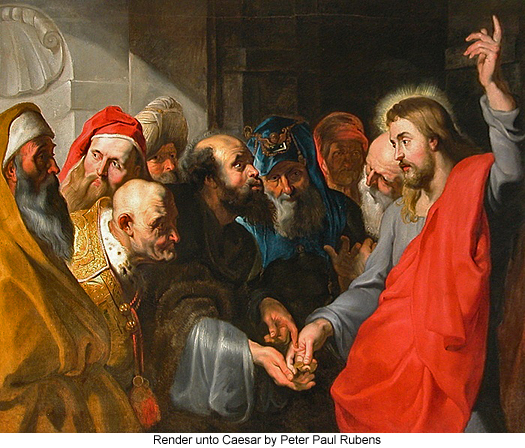
Render to Caesar

When Jesus was asked if it was lawful to render taxes to Caesar, Jesus responds by saying, “Give therefore to Caesar the things that are Caesar’s, and to God the things that are God’s.” This statement was so profound that it amazed those who heard it (Matt 22:22). I want to examine the profoundness of Jesus statement, for I believe that it has massive implications for us beyond "tithes and taxes".

"Give therefore to Caesar the things that are Caesar's"


What is it that belongs to Caesar? Jesus gives us a clue when the Pharisees first ask if "it is lawful to pay taxes to Caesar". Jesus responds to their question by asking to see a piece of money. He proceeds to ask whose image is on the coin and whose signature is on the coin?

Jesus is asking who the coin belongs to. We know something belongs to us, because it bears our image. Just look at your car or your office, it has your image all over it. Not just in the pictures you hang on the wall, but in how it's decorated and organized.

Does painter paint a picture and leave it unsigned? No, he wants people to recognize that which belongs to him. Look at your lunch in your office refrigerator or the lunch a child takes to school. Their inscription is on it to show ownership.

Jesus is saying that all the money belongs to Caesar. That's right, all the money we work so hard for, spending countless days slaving away for a few coins that belong to someone else. And so when Caesar asks for what he owns back, we are not giving taxes, we are rendering back the property to the rightful owner.


So when God asks for what rightfully belongs to him, that which bears his image and his inscription, we are to render "to God the things that are God's". To render God our lives, which bear his image and mark, is not to do something extraordinary. You would never thank someone for giving you back something that belongs to you. To not render ourselves to God is nothing short of robbery.

Wednesday, July 3, 2013

Book Review: "The King Jesus Gospel" by Scot McKnight

Many people ask the question, "Did Jesus and Paul preach the same gospel?".  On occasion some people say "no", but more often than not, a student of the bible would answer with a resounding "yes".  But, in his book "The King Jesus Gospel", Scot McKnight uses this question to show how far the church has fallen from proclaiming the Gospel that Jesus, Peter, Paul and the rest of the disciples preached.

McKnight steps through the Bible to show that the Gospel is the completion of Israel's story (and therefore the world's story) in the person and work of Jesus Christ.  He shows that this is the message preached by Jesus and the apostles.

This Gospel, McKnight claims, has been overlooked in favor of the "plan of salvation" that most evangelicals proclaim.  Outside of the story of the Gospel, the plan of salvation seems like a work we do in order to be saved.  McKnight also says that "personalizing" the Gospel, makes salvation more about the person than the God who does the saving.

It took me quite a while to get through this small book.  It has a lot of good information and is not very long, but I think it probably could have been 75-100 pages shorter (it is only 175 pages in length).  It serves as a great reminder about what the true Gospel is.  Jesus truly was the messiah that we all have been waiting for.

Friday, June 21, 2013

Hebrews 10:26

One passage in Scripture I have been asked about a lot is Hebrews 10:26; which says, "For if we sin willfully after we have received the knowledge of the truth, there remains no more a sacrifice for sins,". This verse has weighed down many people's consciences and played mind games. So, I would like to step through Hebrews 10:26-39 and see what this passage is saying in it's proper context. The actual text from scripture (WEB version) will be in bold. I do not use verse numbers at times because they can sometimes complicate things that are simple and straight forward.

After going to great lengths to explain the priesthood of Christ and how much better His sacrifice for sins was, being once for all, than the sacrifices for sin that had to be offered continually; the writer of Hebrews (starting in verse 19 of chapter 10), exhorts his readers to have confidence to go directly into the presence of God through the blood of Jesus Christ. He tells them that we can approach God with a clear conscience, because we have been cleansed by the blood of Christ. He further exhorts them, as in other parts of the book, to cling to this hope and encourage one another in this hope. Then comes the warning in verse 26:

For if we sin willfully after we have received the knowledge of the truth, there remains no more a sacrifice for sins, but a certain fearful expectation of judgment, and a fierceness of fire which will devour the adversaries.
What sin is being spoken of here? It is the sin that changes our hope into a fearful expectation. It's the sin that insults grace and turns Christ's blood into an unholy thing. The sin that the Israelites (and all of us) struggle with the most, the sin that Calvin calls the "very fountain of all sin", the author of Hebrews rails against in chapter 3 and equates it with disobedience: it is the sin of unbelief (Hebrews 3:19).

The writer now explains why your hope is turned to fear through unbelief:
A man who disregards Moses’ law dies without compassion on the word of two or three witnesses. How much worse punishment do you think he will be judged worthy of who has trodden under foot the Son of God, and has counted the blood of the covenant with which he was sanctified an unholy thing, and has insulted the Spirit of grace?
Here the writer calls unbelief an insult to the grace of God.

This is a perfect example of the difference between a believer who has hope and an unbeliever who has an expectation of fear:
For we know him who said, “Vengeance belongs to me,” says the Lord, “I will repay.” Again, “The Lord will judge his people.”
The writer quotes from Deuteronomy 32:35-36. This further strengths the writers argument against unbelief. In the Deuteronomy passage, vengeance is promised against those who hate him and rely on themselves, where vindication (judgment) and compassion are promised to his people, those who have no strength in themselves (Deu 32:35-36).

It is a fearful thing to fall into the hands of the living God.
For those who don't know about his tender mercy.

But remember the former days, in which, after you were enlightened, you endured a great struggle with sufferings; partly, being exposed to both reproaches and oppressions; and partly, becoming partakers with those who were treated so. For you both had compassion on me in my chains, and joyfully accepted the plundering of your possessions, knowing that you have for yourselves a better possession and an enduring one in the heavens.
The writer reminds the reader of times in which the struggled, but God was faithful and their faith was strengthened by the experience.

Since the people had seen the faithfulness of God, the writer urges them:
Therefore don’t throw away your boldness, which has a great reward. For you need endurance so that, having done the will of God, you may receive the promise.

In a very little while,
he who comes will come, and will not wait.
But the righteous will live by faith.
If he shrinks back, my soul has no pleasure in him.”


But we are not of those who shrink back to destruction, but of those who have faith to the saving of the soul.

We can have full confidence before God because of Christ.  Our sin, even the ones we do on purpose, has been covered by the blood of Christ.  No other sacrifice can give you such eternal confidence.

Tuesday, June 11, 2013

Why are you eating garbage?

Whenever the pure message of God's love and acceptance is taught, enviably someone objects saying, "You are giving people a license to sin". I always laugh, because people sin just fine without a license. But, anyway this objection to the message of God's grace is not new. Actually, Paul asked and answered this objection in Romans. "What shall we say then? Shall we continue is sin that grace may abound?... Shall we sin because we are not under law but under grace?" (Romans 6:1, 15). Paul's answer to both was "Of course not!".

It's a ridiculous question when you understand the love and grace of God and the fact that Jesus Christ lives in you. Let me give an example:

There was an owner of a buffet who was going out back to throw away some trash, when he saw a homeless man digging through the dumpster eating the scraps that had been thrown in there. The owner tells the bum, "Hey, why are you eating garbage? Come in to the restaurant and eat the buffet."
"I ain't got no money" says the bum and continues rifling through the trash.
The owner replies, "Don't worry about it, you can eat at my restaurant everyday for free, come on lets go."

They go inside and there are mountains of fruits, veggies, fish, steak, rice, and cakes. The owner turns to the homeless man and says, "Eat all you want"

the homeless man says, "I can really have anything"

"Anything and everything free of charge"

"Can I go back and eat more garbage?"

Can you believe that? Faced with a beautiful spread of food, the homeless man asked if he could go and eat garbage. How ridiculous!

Jesus laid down His life to take away our sins and make us free from the bondage of sin and death. He was also raised from the dead and gave us His life so that we could live life with love, joy, peace, patience, kindness, faithfulness and self control.

We have missed the whole thing. Jesus offers us the smörgåsbord and we are asking about eating crap. Jesus says that He came "so that we may have life and have it abundantly" , and all we can do is ask, "Does that mean I can sin more". How ridiculous!

We are obsessed with sin. Most preaching is telling people to stop sinning, instead of directing them toward Jesus. It's like yelling at the homeless guy to stay out of the trash instead of telling him to "Come and eat". 1 Corinthians says "The sting of death is sin and the power of sin is the law". Just like the rotting food in the garbage can, sin looks pretty good when all you hear people say is "Don't sin... Quit sinning... It may look good, sooooo goood, but take it from me it's horrible... blah... blah".

Luckily Jesus did not come so that we would quit sinning. He came that we could "have life, and have it more abundantly". Garbage loses it's appeal to a hungry person once he starts experiencing the food from the restaurant. Just like sin loses it appeal once a person begins to experience the reality of knowing Christ and walking with Him in a vibrant relationship.

The grace of God should never be thought of as a license to sin, but as an emancipation proclamation from the bondage of sin and death. This freedom allows us to experience the abundant life in Christ.

Saturday, May 25, 2013

Daddy Beyond Doctrine


Jesus' heart broke.  His little child was crying.  He certainly knew the facts, He was God, of course He knew the facts.  And Martha had come out to make ABSOLUTELY sure Jesus knew that her brother, Lazarus, had died.  She was always ready to serve and always ready to "tell it like it is".  Oh and she told Jesus alright!   

We all know at least one Martha.  The faithful servant, always ready to tell you her list of good deeds.  Her faith really works, and you always feel as if maybe she might ask why yours doesn't.  You seem led into a fake show piety when in Martha's presence.
    
Jesus gave Martha what she needed, a reminder:  "Your brother will rise again".   She thinks she has Jesus all figured out.  She knew this doctrine, maybe a little to well.  Christ knew what she was hinting at, but decided to remind her of a greater hope.  Before letting the words of Jesus sink into her soul, Martha stuffed the infinite God in to a box of her own making.  "I know that he will rise again in the resurrection on the last day.", she says, almost rolling her eyes.  We can almost hear her think, there Jesus goes again, being all spiritual, he had the power to save my brother and didn't, know he's hiding behind eternal hope again.  Why can't Jesus be more practical!  Jesus could feel her frustration and gives her what she needs (but doesn't want): a theology lesson.  

"I am the resurrection and the life. Whoever believes in me, though he die, yet shall he live, and everyone who
lives and believes in me shall never die. Do you believe this?".  This is one of the most profound theological statements in the Bible.  Jesus is telling Martha that He is the embodiment of the doctrine of the resurrection that she knows so well.  And what does she come back with?  The "right" answer: "Yes, Lord; I believe that you are the Christ, the Son of God, who is coming into the world."   Now that Martha has said her peace, she tells Mary that "The Teacher is here and is calling for you."  Isn't that something that is just like a Martha to do... She couldn't talk any sense into Jesus, maybe her sister could.

Mary comes out to Jesus, falls before him and weeps. The Bible tells us that Jesus "groaned in the Spirit", which means, Jesus felt empathy.  The Almighty God feels our pain.  Remembering that when I am going through a hurtful time in my life, always seems to help.  

Mary didn't need doctrine, she needed Daddy (Abba).  Mary comes out and repeats exactly what her sister said, "Lord, if you had been here, my brother would not have died." And bursts into tears.  All the the slogans we say to try to take away the pain meant nothing, all the doctrine in the world didn't matter, she was hurting and she needed her Daddy.  His child was broken, that broke His heart.  "Where have you laid him?"

Too many times we come to Jesus with a Martha attitude.  We come, in almost an accusatory fashion, looking for answers.  Nine times out of ten, proper doctrine will answer those questions, but bring no relief.  Proper doctrine is needed, but when we are hurting, we need to cry out to our Daddy who transcends doctrine. 

Friday, May 24, 2013

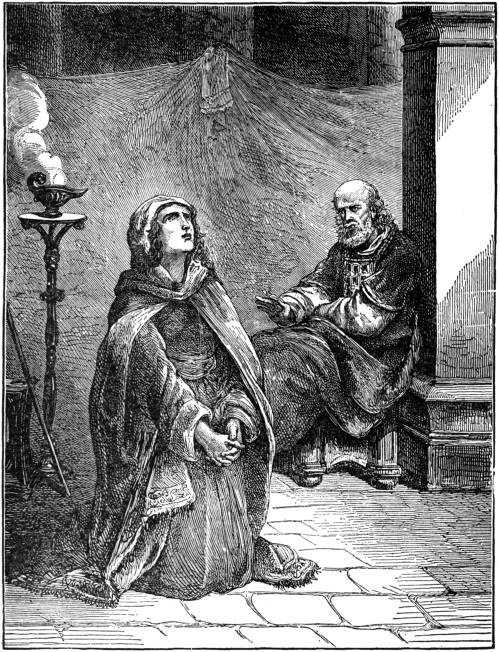
Mother's Prayer of Rejoicing

Scripture used: 1 Samuel 2:1-10  
Notes: After giving over her precious son to the Lord and entrusting him to His care, Hannah prays this prayer of joy...

My heart exults in the LORD!
    My horn is exalted in the LORD.
My mouth is enlarged over my enemies,
    because I rejoice in your salvation.
There is no one as holy as the LORD,
    For there is no one besides you,
    nor is there any rock like our God.
Don’t keep talking so exceedingly proudly.
    Don’t let arrogance come out of your mouth,
    For the LORD is a God of knowledge.
    By him actions are weighed.
The bows of the mighty men are broken.
    Those who stumbled are armed with strength.
Those who were full have hired themselves out for bread.
    Those who were hungry are satisfied.
Yes, the barren has borne seven.
    She who has many children languishes.
The LORD kills, and makes alive.
    He brings down to Sheol, and brings up.
The LORD makes poor, and makes rich.
    He brings low, he also lifts up.
He raises up the poor out of the dust.
    He lifts up the needy from the dunghill,
    To make them sit with princes,
    and inherit the throne of glory.
For the pillars of the earth are the LORD’s.
    He has set the world on them.
He will keep the feet of his holy ones,
    but the wicked shall be put to silence in darkness;
    for no man shall prevail by strength.
Those who strive with the LORD shall be broken to pieces.
    He will thunder against them in the sky.
The LORD will judge the ends of the earth.
    He will give strength to his king,
    and exalt the horn of his anointed.

Living Free

"I strive to live my life with so much freedom and joy, that uptight religious people will doubt my salvation, and the world will see Christ".

This quote from one of my favorite authors, Dr. Steve Brown, has become a motto for my life.  The Bible teaches us that we are in bondage to sin and to this worldly system.  That is why Christ came, "to preach good news to the poor... to heal the brokenhearted, to proclaim release to the captives, recovering of sight to the blind, to deliver those who are crushed" (Luke 4:18).  He came to proclaim the acceptance of the Father! (Luke 4:19).  If that doesn't make you want to get up and dance, I don't know what will!

The Scriptures continually tells believers that we are free (Gal 5:1, John 8:32, Heb 9:15, 2 Cor 3:17, Psalm 119:45, etc) and implores us to live as free people (1 Peter 2:16).  So lets live as free people!

Sunday, May 12, 2013

Freedom of a Praying Mother - Sermon (audio)

Here is the sermon I preached on Mother's Day 2013.  The scripture is 1 Samuel 1:1-2:10.  At the end of the sermon I read Hannah's prayer found in 1 Samuel 2:1-10
Click here to download or press play to stream